There is so much that goes into reading instruction. Add another language and it can be overwhelming knowing where to start and how to map out the path to take when planning a lesson.
Vocabulary
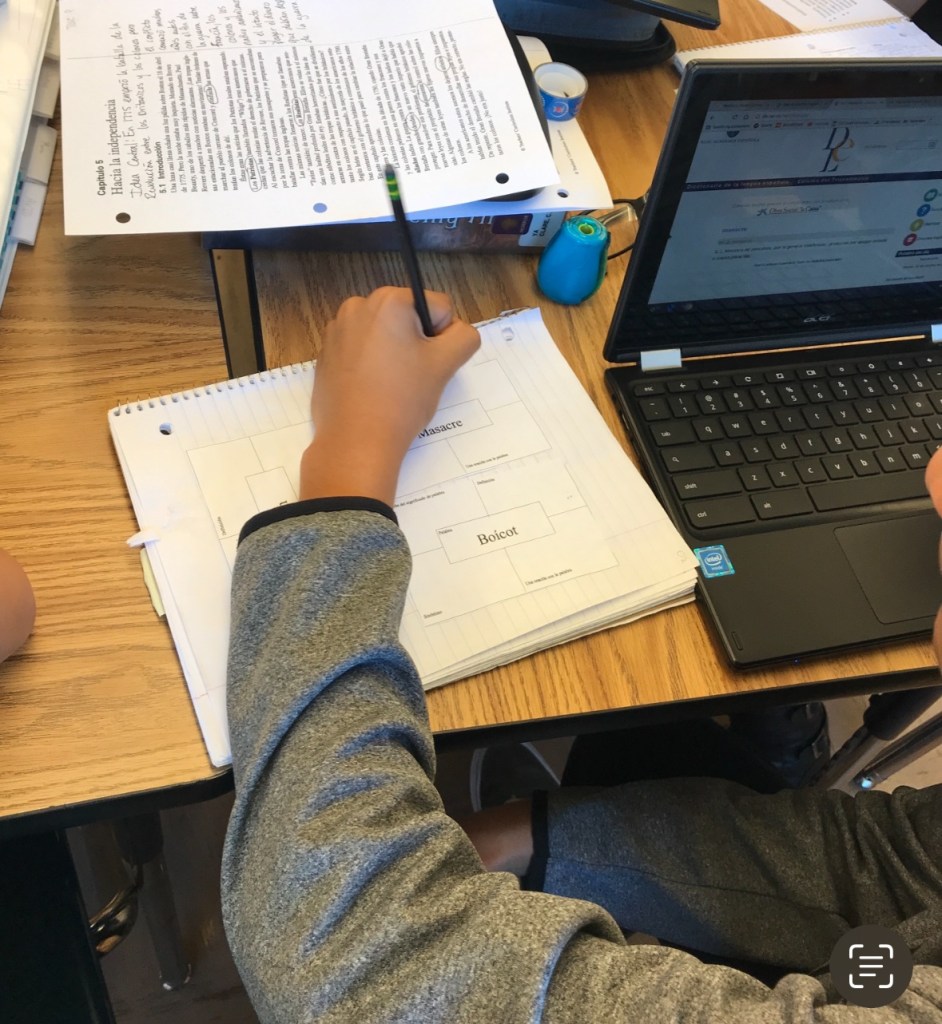
I have learned so much over the years and tried almost everything to help students learn new words and increase their vocabulary. I have used the frayer’s model for vocabulary that asks students to write the word in the center and add the definition, an image, a synonym and a sentence.
I have added words that we have learned to a word wall for students to use as reference for reading and writing. I have asked students to add words as they learn.
At one point early on, I was sure that vocabulary was the key to learning to read in Spanish. If they knew more words then they would gain more fluency. I had students learn and take notes on upwards of ten words a week. Sometimes it was pure memorization. I was going off the memory of when I learned to speak Spanish in college, I learned vocabulary for breakfast, lunch and dinner (literally studying stacks of flash cards at every meal). I now see the error in my thinking because words in isolation are just that, words. It is in the context of a sentence, paragraph or interesting text that words come alive. It is the wanting to make meaning in a text that makes students want to learn new words.
So, what do I do now? I teach vocabulary in context. We read, we circle words and we go back to words that keep students from moving forward to understand the text. I also teach words and then use them in the writing that I model for students. I use them when speaking with students. I expose students to the same words enough times that they remember those words.
Comprehension
Comprehension was the other big hill that I was ready to die on when I started teaching Language Arts in Spanish. It is hard to teach reading and expect students to have a high level of comprehension at the Middle School level in Spanish without the intentional use of strategies that help them focus on comprehension. The following are the reasons that I believe this is true.
By Middle School, students who have grown up in the United States, whether they speak Spanish or English at home, have a higher interest in reading books in English by Middle School. There are more books available in English, the books tend to appear to be of higher interest, and students tend to be stronger readers in English.
I don’t use these reasons to deter me from teaching reading in Spanish and asking students to engage with texts in Spanish. I just know that there will naturally be a little bit of feet dragging when it comes to asking students to read more complex texts and chapter books in Spanish. The way that this gets better is by continuous practice and improvement. The more they read, the more confident they get and the more motivated they are to keep reading.
I find that recent arrivers, students with very little English or students who have spent a considerable amount of their time living in and going to school in a Spanish Speaking country are an exception to this. Often, the are the ones who will be more eager to read books in Spanish over books in English. This isn’t always true, but can be.
Because of this, I find that I have to do a lot more with students than just give them a reading passage in Spanish and ask them to answer comprehension questions about the reading. I have to find ways to teach students to approach the text, read it various times, find connections to the topic or story and then write summaries about what they have read and understood. I also give them reading in chunks and use jigsaw reading approaches so that the amount of text they are reading is more manageable. It is great to have students read and then give them a task in a group such as a presentation or project. Lastly, the use of dialogue, anticipatory guides and discussions is also a powerful way to help students increase their level of comprehension before, while and after reading a text.
Fluency
The area that I have learned more about over the years and find to be more and more important is that of fluency. Not just fluency in the language of instruction, but also fluency in reading in that language. Students may struggle with comprehension because when they read in their mind, they are not actually able to read fluently. Therefore, it is helpful to have them read outloud with a partner, by themselves and with the teacher. This practice ensures that their comprehension is not affected by their actual phonetic and phonemic understanding of the act of reading in Spanish.
Conclusion
There is a lot more to be said about reading in Spanish. Please comment here if you have ideas, insights or questions.
 Grantmo